Our story
Amber
Şan Amber began at a small bench, with a single file and a handful of raw amber. We still work in the same workshop, and most of our tools are the ones we started with.
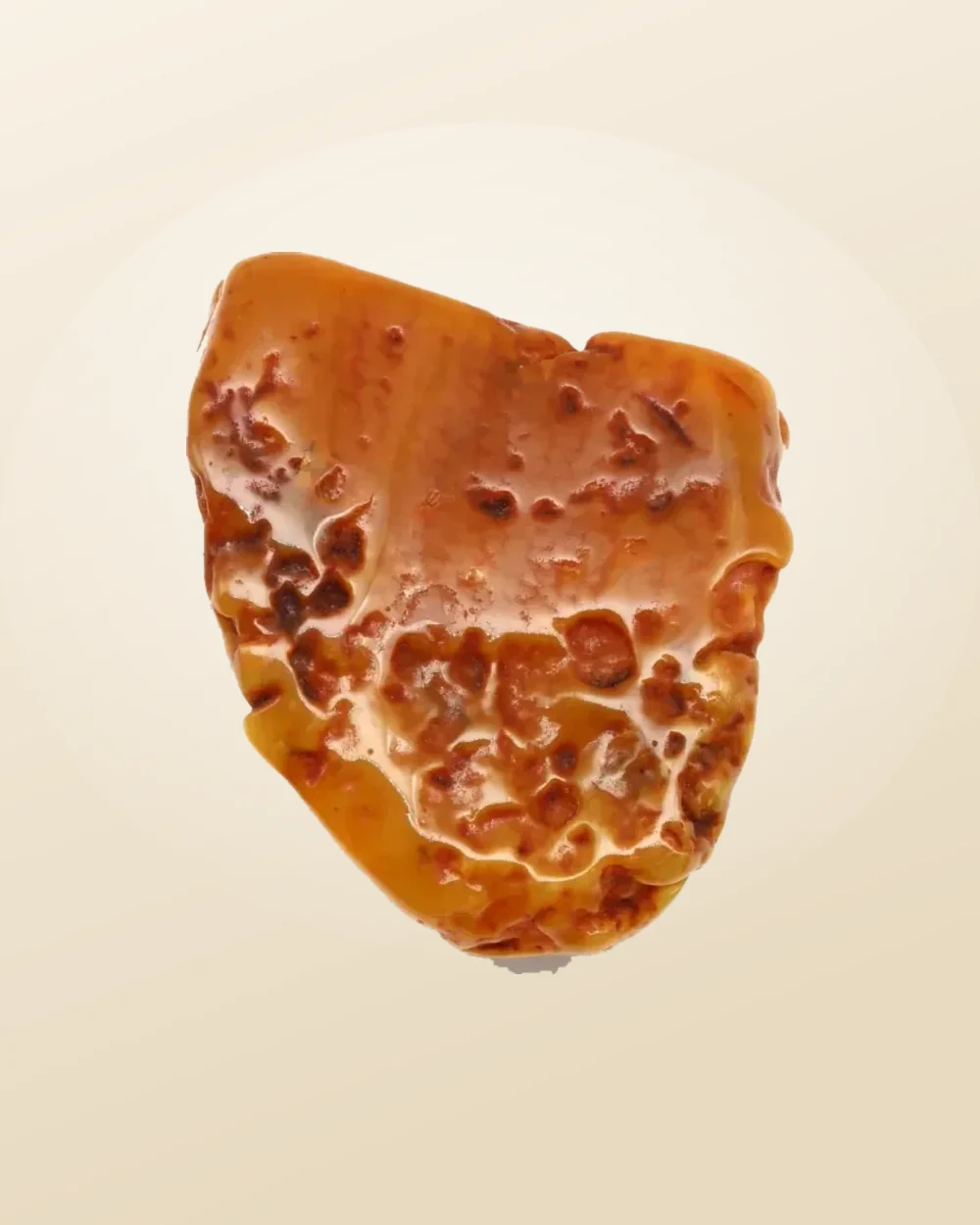
Every piece of amber reaches us raw. We read its grain, choose the direction of the cut accordingly, then polish it for days using nothing but water and felt. We never dye, heat-treat for colour, or fill it.
Why amber
How we work
You decide
Amber and the diamond
Today we compare amber with the diamond, that symbol of wealth. The choice is yours — let us begin.
A diamond is genuinely valuable; no one can deny that. But its value is shaped largely by a market system and by brands, both built by people.
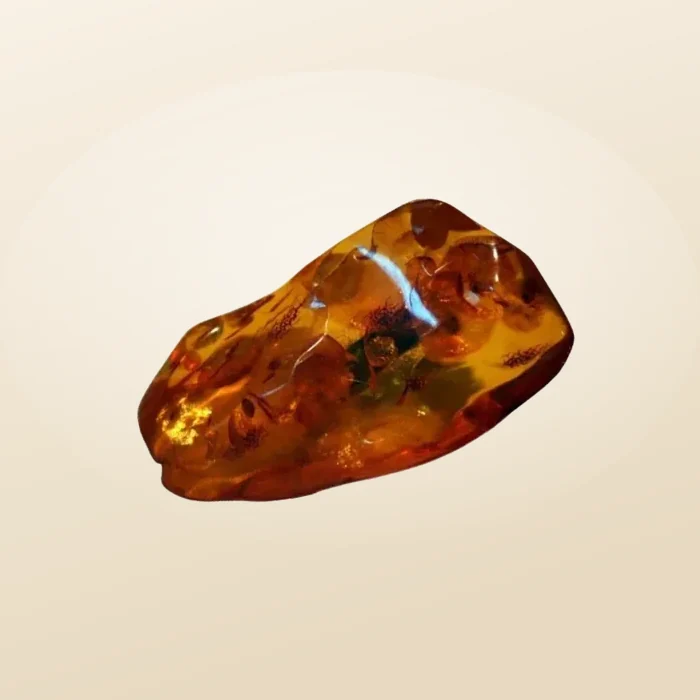
Amber is the work of millions of years. The resin of a tree fossilises inside nature and reaches us through time. Every piece differs from the next; the same pattern, the same vein, the same colour never forms twice.
A diamond most often stands for wealth. Amber stands for history, for the natural world, and for a story.
A diamond is cut and polished in a factory. Amber is a singular work of art, shaped by the patience of nature.
Someone wearing a diamond carries a precious stone. Someone wearing amber carries a natural inheritance millions of years old.
That is why, for some people, real wealth is not a price tag but singularity, naturalness, and a bond with the past. And that is exactly what makes amber special.
As Ibn Sina told it
Amber draws light objects to itself when rubbed. Amber should be regarded not only as ornament and jewellery, but as a natural fossil deserving medical study and attention. Owing to its organic structure and its origin in resin, it is held to carry many remedies and to give energy, for the health of the body and of the spirit alike.